Dispatch 06: The Arithmetics of a Life Well-Lived
The Question
We are the most connected, hyper-productive generation in history. We have been conditioned to believe that success is an individual pursuit—a solitary climb toward a better title, a bigger corner office, and total financial independence. We are taught to build lives where we need no one.
But what if we have spent our best years optimizing for the wrong kind of wealth? What if the ultimate luxury isn't independence, but belonging?
The Arrival
The air changes when you cross the border into Andalusia.
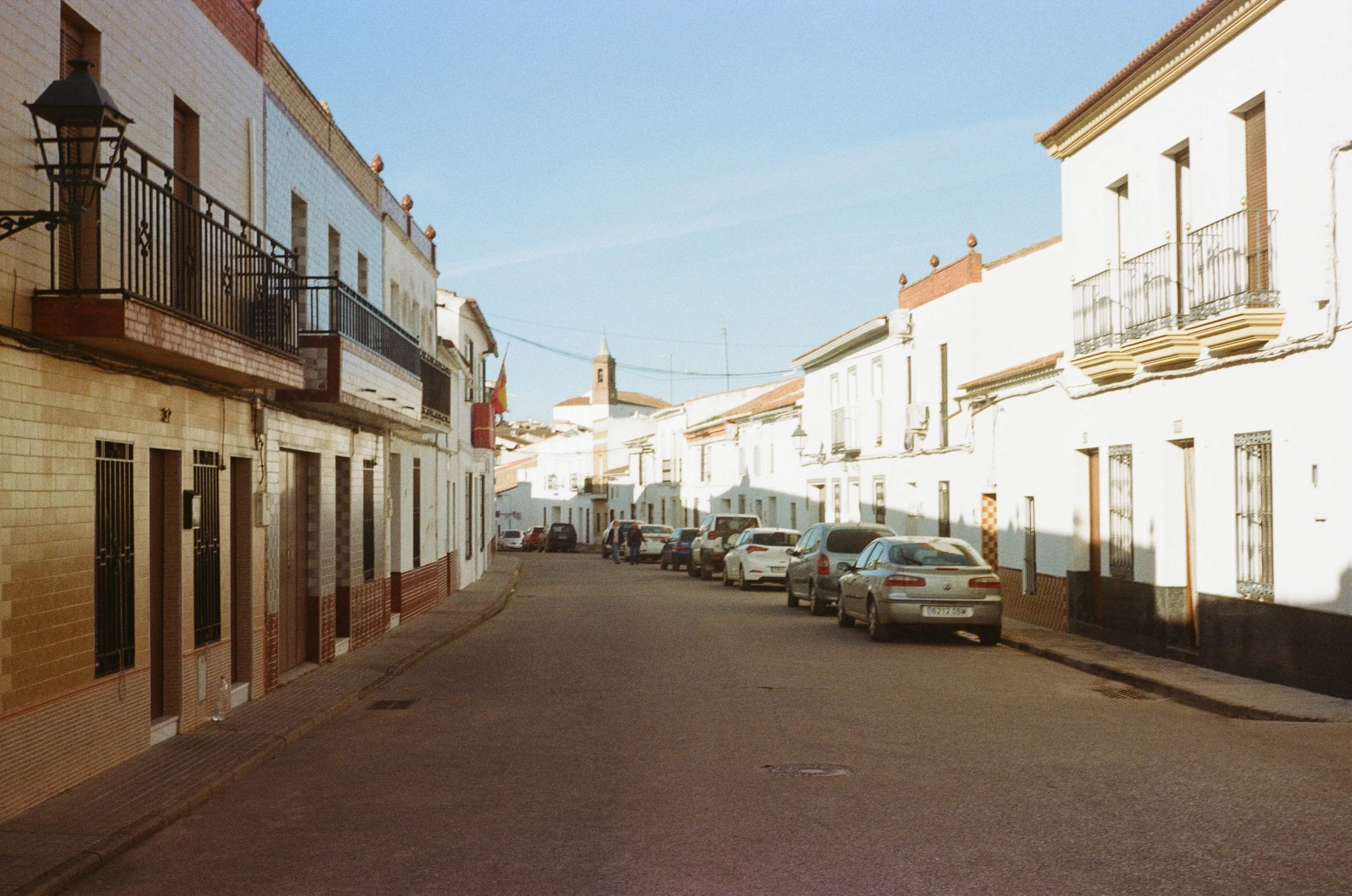
We drove the final stretch from Extremadura with the top of the Z3 down, leaving the noise of the highway behind for endless green fields and scattered oaks. When we finally pulled into the whitewashed streets of Encinasola, the roaring engine of our modern life was officially shut off.
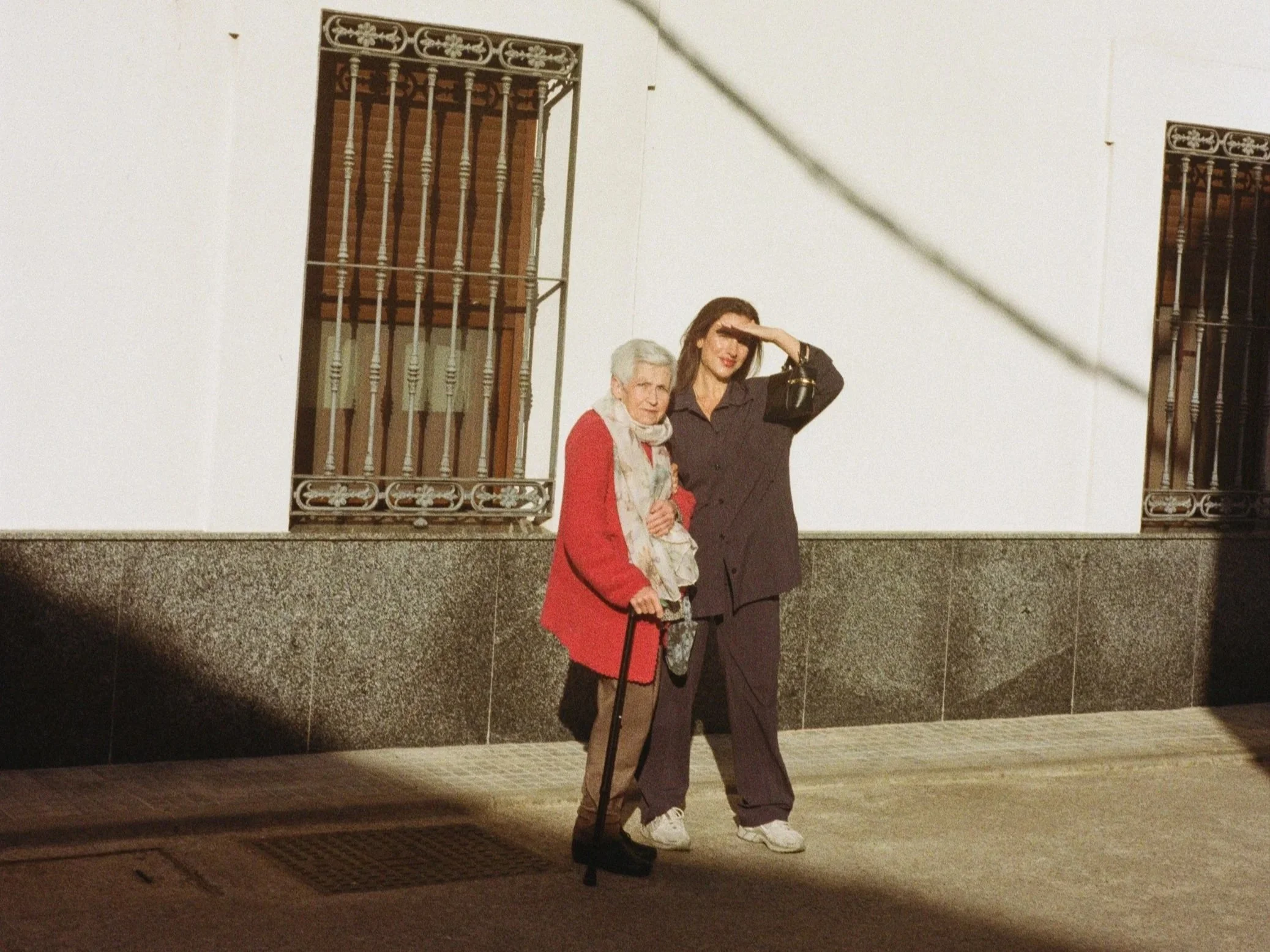
Waiting for us at the door, waving their hands with the kind of warmth that only exists far from the city, were Elisabet, her friend Kaki, and Grandma Mari.
Immediately, the rhythm shifted. We traded the speed of the sports car for the deliberate, grounding pace of Mari’s wooden cane. Walking with her to the village square was like walking with royalty. Everyone stopped to greet her. In that simple walk, I witnessed the raw reality of the village ecosystem: young people who had emigrated to modern cities returning to find their anchors, seeking the chosen family they grew up with.
The air smelled of oak wood and slow-cooked stews. Here, obligations are stunningly simple: you work, you eat, you rest, and you help your community. There is no agonizing over the future or dwelling on the past. The present tense is the only one that matters.
The Kitchen Table
The real masterclass, however, happened the next morning.
Mari’s kitchen is a sanctuary of intention. The smell of coffee brewing perfectly in her ancient teapot filled the room. We sat around a circular table, eating toast with tomato and ham, listening to her stories. She showed me an arroba—an old measuring tool from her grandmother weighing exactly 11.5 kilograms. It was an instrument of sheer precision from a time before digital scales, a physical reminder of the history she carries with her.
Later, she began cutting potatoes by hand. Her movements were precise, unhurried, and completely devoid of stress. When her granddaughter Elisabet offered to help, Mari politely declined. She likes doing it her way. She protects her rituals—her morning coffee, her afternoon cake—with fierce intentionality. She doesn't perform these tasks for an audience; she simply is.
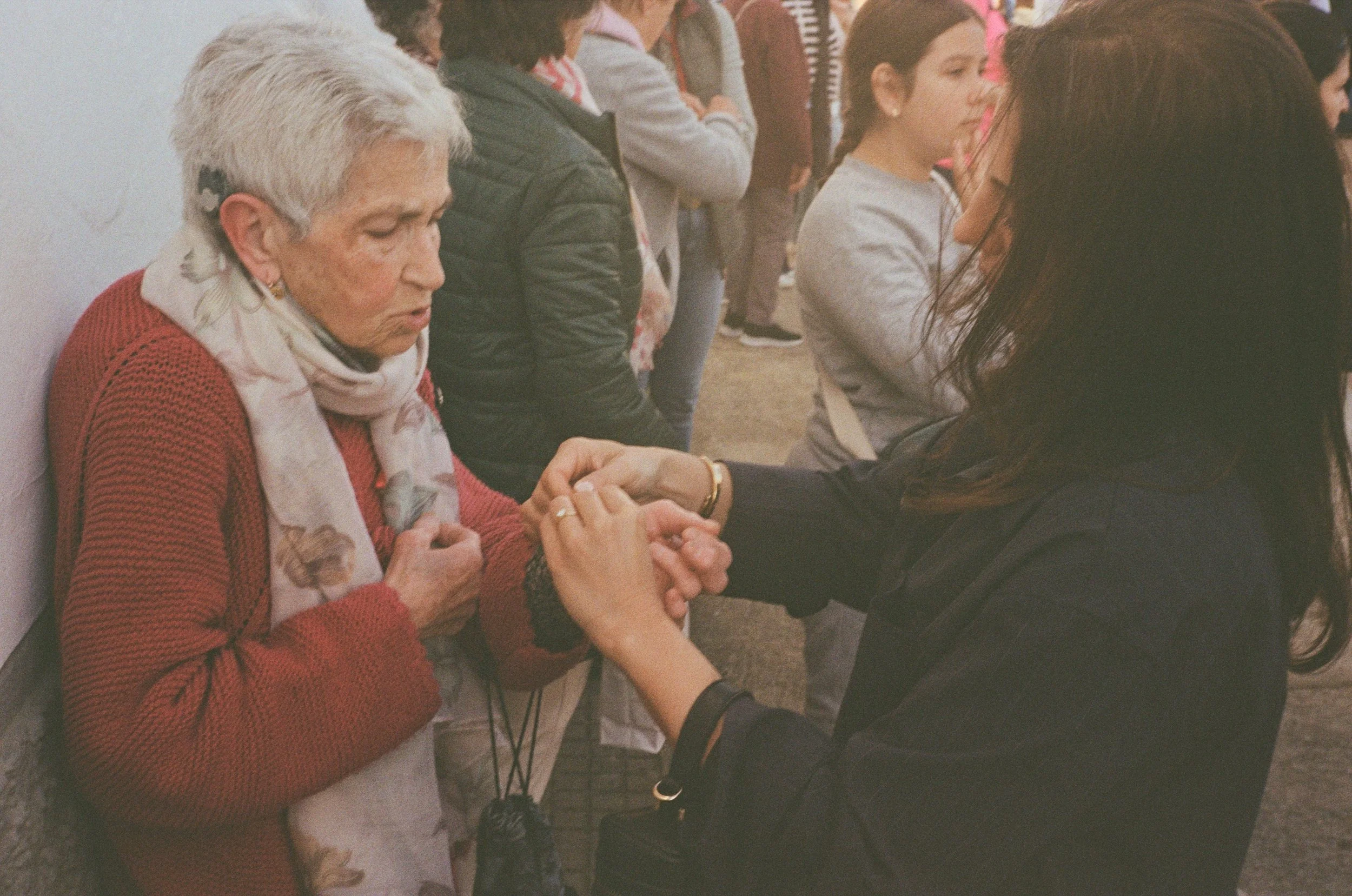
While she cooked, Elisabet gently interviewed her about the modern world. Mari noted the rushing, the anxiety, and how the very nature of attention has fractured.
Then, we asked her the defining question: "What is happiness to you?"
In our modern, individualistic society, the answer is usually linked to accumulation: making more money, achieving higher status, securing freedom. Mari didn't pause her cooking. She simply smiled and said:
"Having health for a long time, so I can help those around me."
We didn't just talk that day. We sat down to the most important ritual of village life. We ate those perfectly cut potatoes, fried in local olive oil, alongside incredible Iberian pork meatballs (albóndigas de presa ibérica). It was a magnificent meal filled with laughter. In that moment, we were simply family, fully present, practicing the ancient art of giving thanks for the food and the company.
The Aperture
Mari's definition of happiness dismantled everything I thought I knew about modern success.
We have been taught to focus so intensely on ourselves that we often forget we are community-driven creatures. We isolate ourselves in pursuit of a "better life," working relentlessly to accumulate wealth.
And here lies the ultimate paradox of our generation: we use the money we earned in isolation to try and buy back the very things we sacrificed.
We buy a luxury watch to signal that we belong to an exclusive tribe. We pay €7 for an artisanal croissant, hoping to purchase a fleeting moment of the "slow life" our grandparents lived for free.
We try to consume our way back to connection and intentionality.
But Mari doesn't need to buy her way into a slower life. She has mastered the highest form of wealth: total control over her time and a profound, authentic connection to her people.
True progress isn't about running away from our roots to build an isolated fortress of success. It is about remembering that the richest lives are those deeply anchored in community, simplicity, and the beautiful weight of belonging.
