Dispatch 05: The Illusion of the Better Life
Between the silent streets of Cáceres and a Michelin-starred table, a reflection on the traditions we abandoned, and the reality we must recover.
- Jose Martinez -
Founder & Editor-in-Chief
Caceres
We often measure the success of a life by the distance we travel from where we started. Driven by ambition or the search for a "better life," many of us pack our bags and move toward the glow of modern hubs. There is undeniable courage in that choice, and real progress in the lives we build in those cities.
But there is an uncomfortable question that often remains unanswered in the background of our success: What parts of our rooted selves did we leave behind in the exchange?
We tend to look at the traditions of our parents and grandparents as artifacts of an outdated era—relics that don't belong in our high-speed, digital future. But during the second leg of Escudería A. García’s journey across Spain, I found myself wondering if the future we are chasing is actually more "real" than the traditions we abandoned. Perhaps the "better life" isn't a destination we reach, but a balance we must recover.
"Progress is necessary, but roots are vital. Perhaps the ultimate luxury is knowing how to build your future without losing your foundation."
The Fabric We Left Behind
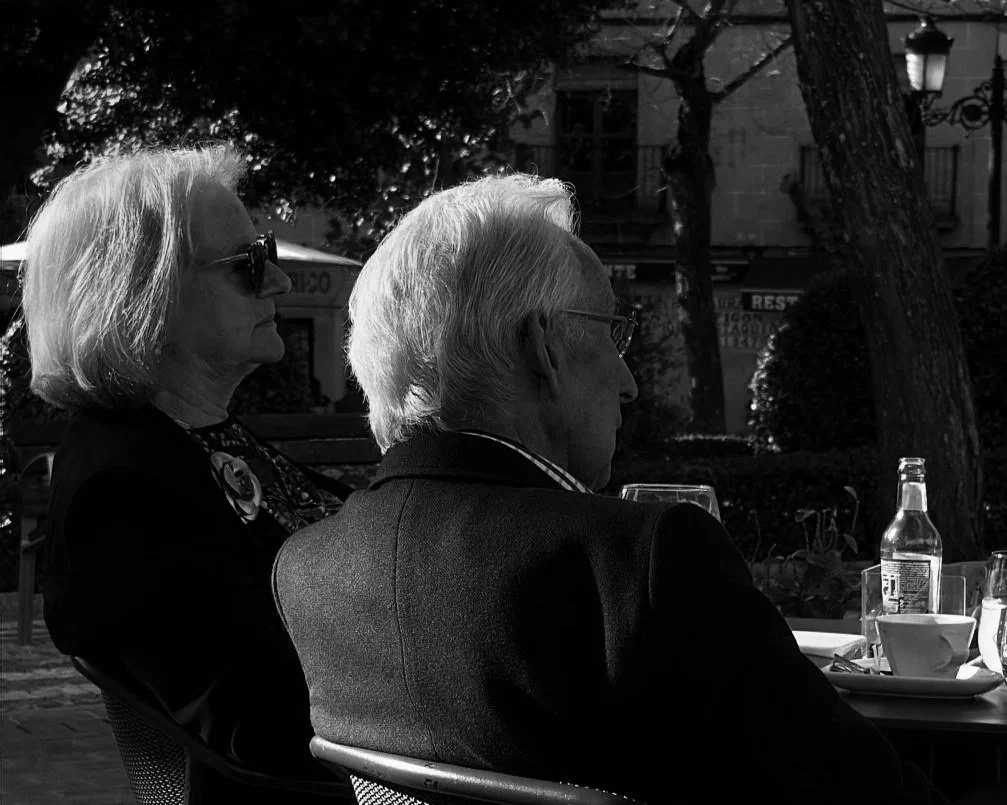
Our route South was a sociological study in respect and community. In Peñafiel, standing in the medieval dirt square of the Plaza del Coso, I watched an elderly couple walking in their finest suit and tie on Holy Thursday. They dressed not to impress an audience, but out of solemn respect for the day itself.
Further south in Plasencia, a walled market city, the plazas were bursting with life. Sharing local torta del casar cheese among the crowds, you could feel a specific phenomenon unique to countries with deep rural roots: the return. Entire generations of people who had migrated to the big cities for work—chasing that elusive "better life"—return to their villages for the holidays. Grandparents, parents, and youth blending in the streets. You realize that in societies completely driven by money, where you are only worth what you own, this intergenerational anchor is exactly what is missing.
The Raw Devotion of Cáceres
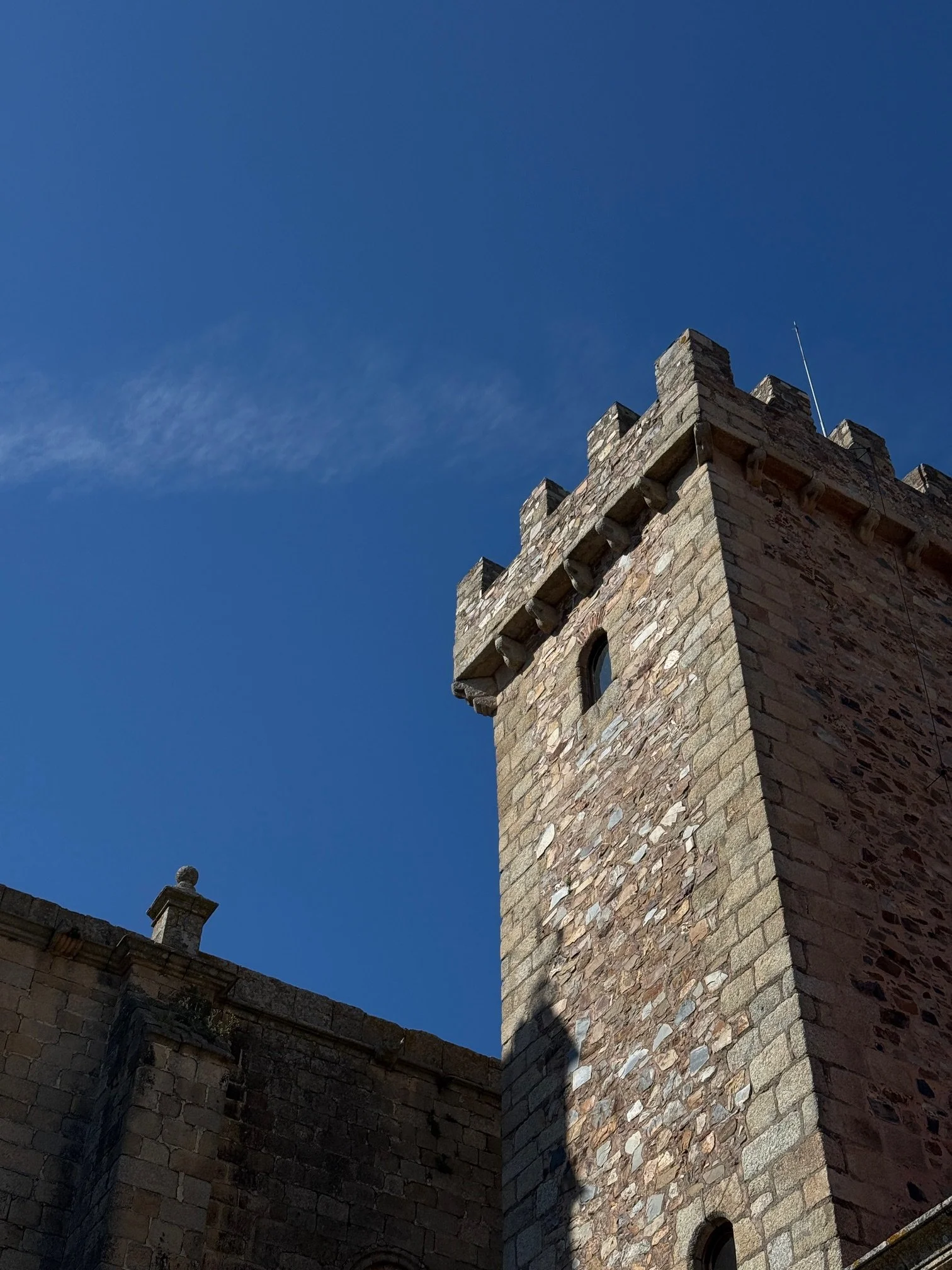
The true thesis of this journey crystallized when we arrived in Cáceres. For the international reader, Cáceres is a perfectly preserved medieval and Renaissance stone city. During Semana Santa (Holy Week), it becomes the stage for a tradition dating back to the 16th century, where brotherhoods carry massive floats depicting the Passion of Christ.
As a tourist in my own country, standing in those crowds, I felt a sudden dread. I feared that this beautiful, raw tradition would be swallowed by mass tourism—reduced to a spectacle for visitors who look through their phones without understanding the gravity of what they are witnessing.
Yet, Cáceres held its ground. The respect was absolute.
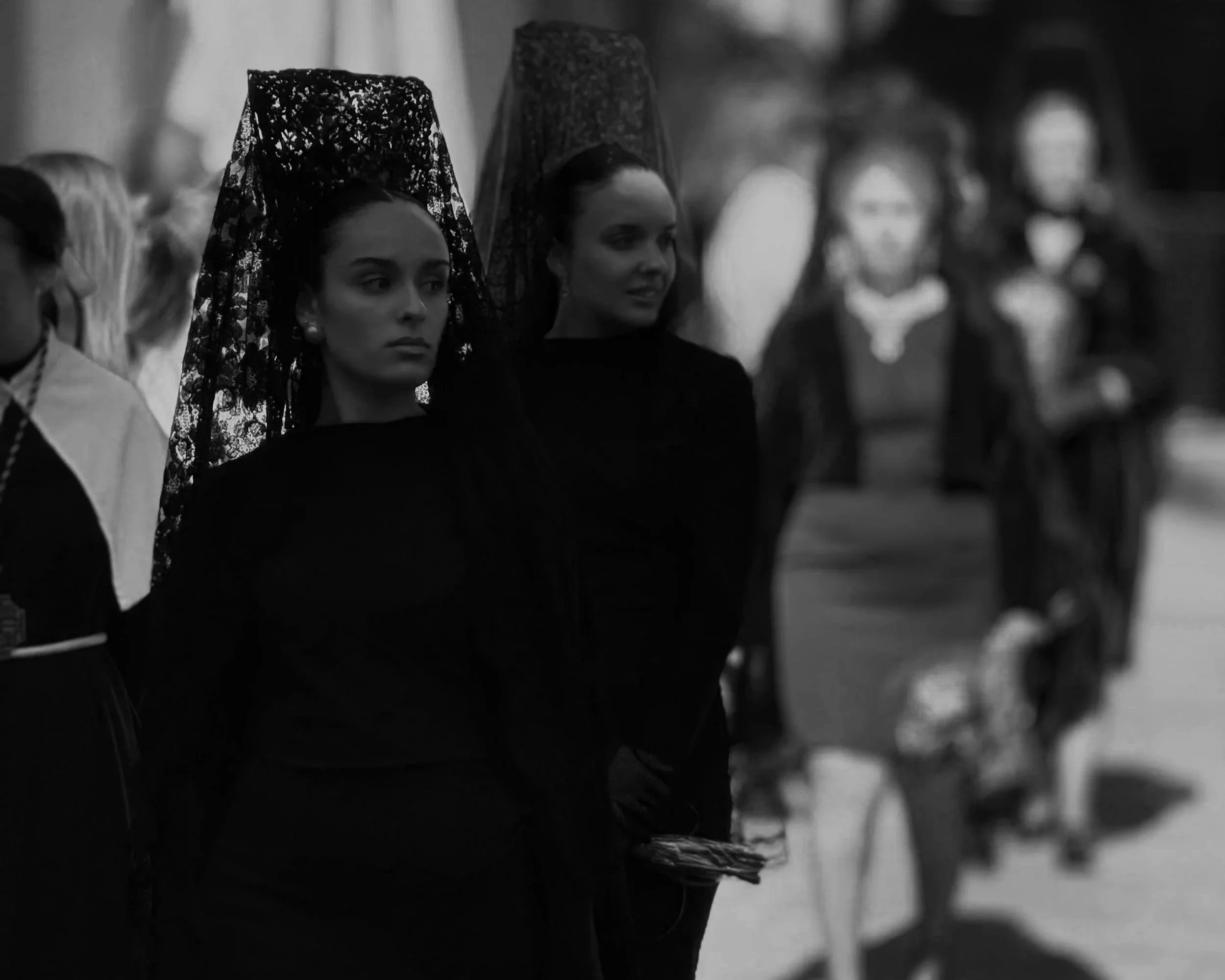
During the nocturnal procession, my mother and I walked shoulder-to-shoulder behind the figure of Mary. The crowd was entirely silent. What struck me most was seeing parents passing this tradition down to their children was a visceral reminder of a generational anchor. In our modern pursuit of individuality, we often view these rituals as cages of the past. But standing there, I had to ask myself: Is the freedom of our modern, transient lives actually more fulfilling than the weight of belonging to something that predates us?.
The Corner and The Capataz
The next day, April 3rd, was my mother’s 70th birthday. As we walked out for a celebratory midday beer, we encountered another procession.
This brotherhood walked with dragging chains and bare feet. We stopped at a narrow, three-way intersection where the sloping cobblestone streets met. As the massive wooden float approached, executing a 90-degree turn, the Cristo passed literally twenty centimeters from my face.
The crowd flowed organically, shrinking back to give the penitents space out of sheer respect. Then, the next float approached, carrying the Virgin Mary. It stopped directly in front of me.
The capataz (the guide who directs the men carrying the float hidden underneath) broke the silence with a raw, guttural shout: "¡Al cielo con nuestra señora madre, de gracia y esperanza, que siga repartiendo gracia y esperanza! ¡Todos por igual! ¡A esta es!"
He struck the metal hammer. In perfect unison, the men lifted the staggering weight of the float into the air with just one hand. The orchestra erupted. The float began to sway left and right, a hypnotic dance of grief and beauty between mother and son. Watching that footage now still gives me goosebumps.
The Michelin Star and The Celebration
You cannot truly celebrate life until you have looked mortality, grief, and raw tradition in the eye.
Hours after witnessing the solemnity of the processions, we sat at the legendary three-Michelin-starred restaurant, Atrio. To celebrate my mother’s 70 years of life, we opened an exceptional bottle of wine: a 1er Cru Nuits-Saint-Georges Aux Murgers 2009 by Méo-Camuzet.
The contrast was poetic. In the streets, barefoot penitents mourned death; inside, a mother and son laughed, smiled, and savored every single bite of an extraordinary menu, celebrating life. We ended the night dancing in the streets, drinking gin and tonics. Because a day that reminds you of how fleeting life is cannot end without a proper dinner.
This is the essence of intentional living. It is not about rejecting progress or demonizing the modern world, but about auditing the cost of our participation in it.
It requires the humility to respect the silent, heavy weight of the traditions we thought we outgrew, and the wisdom to know when to uncork a vintage Burgundy to celebrate the people we love. As you look at where you are today, ask yourself: Are you where you wanted to be, or are you just far from where you started?
"Do not let your life become a transactional exchange. Find your roots, respect the silence, and when the time comes to celebrate, do it with everything you have."
(To be concluded in Dispatch 06).
